CSM vs PSM I: two ways to become a certified Scrum Master
Both certify that you understand Scrum, the most common agile framework. The CSM requires a two-to-three-day course and renews every two years; the PSM I is a self-study test that costs less and does not expire.
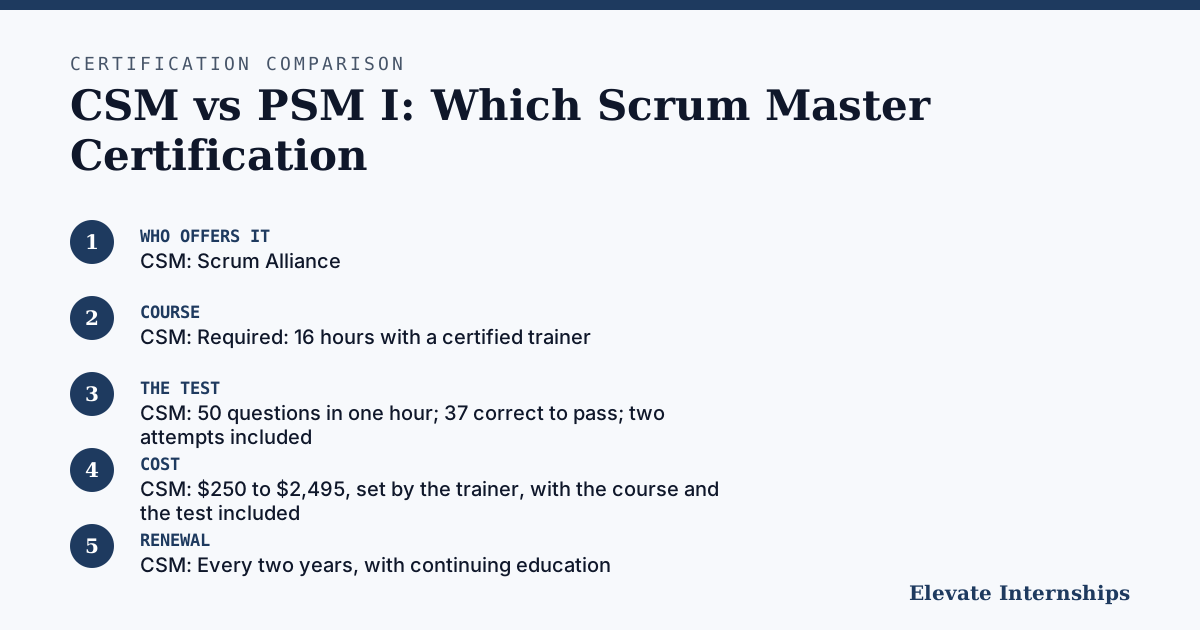
| Compared | CSM | PSM I |
|---|---|---|
| Who offers it | Scrum Alliance | Scrum.org |
| Course | Required: 16 hours with a certified trainer | None required; Scrum.org’s learning material is free |
| The test | 50 questions in one hour; 37 correct to pass; two attempts included | 80 questions in one hour; 85% to pass |
| Cost | $250 to $2,495, set by the trainer, with the course and the test included | $200 for the test |
| Renewal | Every two years, with continuing education | Does not expire |
Which should you take?
Choose the PSM I if you can study on your own and want the lower cost. Its test is stricter, and the certification does not expire.
Choose the CSM if you learn best in a live class or an employer is paying. The course itself is much of the value.
Where to start
- CSM — Certified ScrumMaster — Scrum Alliance. Paid $250–$2,495 depending on the trainer; the price covers the 16-hour course and the test. Renew every two years. Glossary entry
- PSM I — Professional Scrum Master — Scrum.org. Paid Exam ~$200, no mandatory course. All Scrum.org learning material is free. Glossary entry
Fees, exam formats and eligibility rules change. Everything here was checked against each provider's own pages on October 23, 2026; confirm on the provider's site before you register or pay.
Questions students ask
Is the PSM I harder than the CSM?
Its test is longer and needs a higher score: 80 questions and 85% to pass, against 50 questions and 37 correct for the CSM.
Do Scrum Master certifications help with business internships?
They can for operations, product and project roles, where teams often work in sprints. They are less relevant to accounting or finance internships.