Paid vs. Unpaid Internships: What Business Students Should Know
Most business internships at companies are paid, and many are paid well. Unpaid ones still exist, especially at small companies, startups, nonprofits and in some creative fields. Knowing the rules helps you judge an offer.
When an unpaid internship is legal
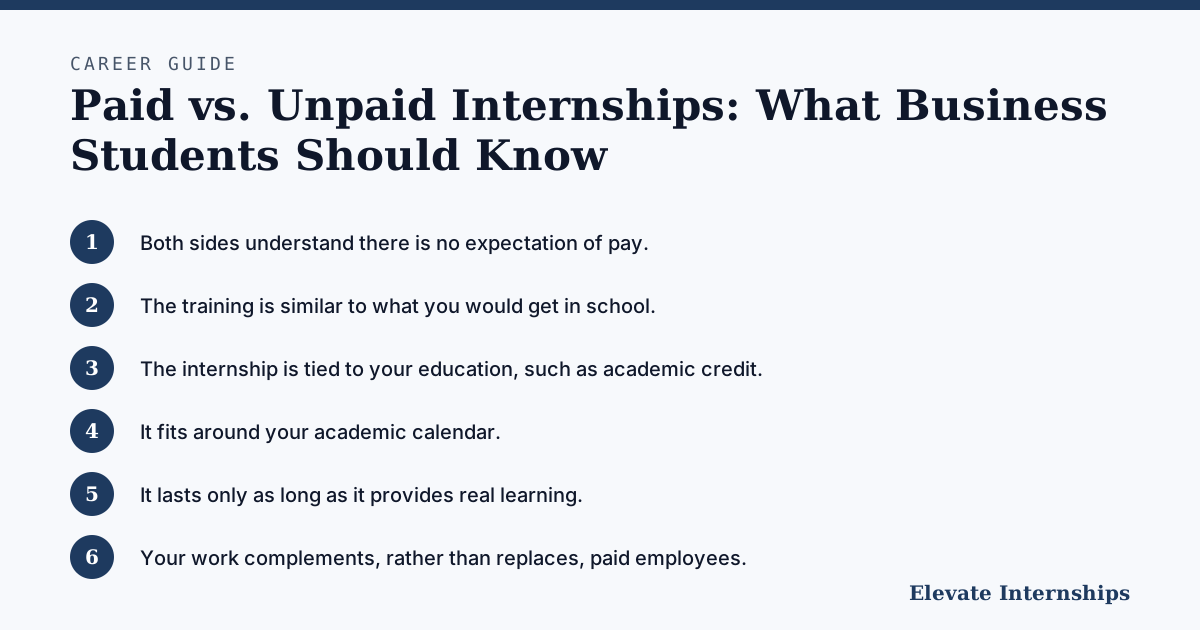
For a for-profit employer in the United States, the Department of Labor uses the "primary beneficiary" test: an internship can be unpaid only if the intern, rather than the company, is the main beneficiary. The factors it looks at include:
- Both sides understand there is no expectation of pay.
- The training is similar to what you would get in school.
- The internship is tied to your education, such as academic credit.
- It fits around your academic calendar.
- It lasts only as long as it provides real learning.
- Your work complements, rather than replaces, paid employees.
- Both sides understand the internship does not promise a job at the end.
No single factor decides it. The Department of Labor's Fact Sheet #71 explains the test in full. Rules for nonprofits and government offices differ, and some states have their own. This is general information, not legal advice.
Questions to ask before accepting an unpaid role
- What will I learn, and who will train me?
- Will I do real projects, or mainly errands and admin?
- Can I receive academic credit, and does my school charge tuition for those credits?
- Is there a stipend, or help with transport or housing?
- Can I afford it? A paid part-time job plus a project of your own can be worth more than an unpaid internship.
Finding paid internships
- Look at large and mid-sized companies' own careers pages, where internships are almost always paid.
- Search federal internships on USAJOBS through the Pathways program; many are paid.
- Ask your career center about funding: many schools offer grants for students taking unpaid or low-paid summer roles.
Stipends, hourly pay and academic credit
Paid internships usually pay by the hour, like a part-time job, and many large employers pay business interns well. Some organizations pay a fixed stipend instead, which can work out to less per hour. Academic credit is not pay: your school may charge tuition for the credit, so ask what it costs before you accept a credit-only role.
Questions students ask
Are unpaid internships legal?
At U.S. for-profit companies, only when the intern is the primary beneficiary under the Department of Labor's test. Rules differ for nonprofits and government offices, and some states have their own. This is general information, not legal advice.
Are most business internships paid?
Yes. Most business internships at companies are paid, especially at large and mid-size employers.
Should I take an unpaid internship?
Only if the learning is real, you can afford it, and there is no paid option that teaches the same skills. Ask what you will do and who will train you before accepting.
Next: find business internships for your major or compare certifications for business majors.