Best certifications for human resources students
The employee lifecycle, then the credential that gates senior HR roles.
Human Resources internships for college students
When human resources recruits
- Sophomore year — Join the SHRM student chapter and look for campus recruiting or residence-life roles.
- Junior fall (Sep–Nov) — HR leadership-development programs at large employers recruit.
- Junior spring — Most HR, recruiting and people-operations internships at mid-size companies.
- Any time — The aPHR needs no experience and can be taken before you graduate.
Human resources internships cover recruiting, onboarding, benefits and people analytics, and employers look for students who understand employment basics and can handle confidential information carefully. HR has two main certifying bodies in the U.S., HRCI and SHRM, and one of their credentials is designed for people just starting out. The rest of the list builds practical skills such as recruiting tools and HR data.
How to choose
- HRCI's aPHR is designed for people new to HR and does not require HR work experience, which makes it a realistic student credential.
- SHRM's certifications are well known; check SHRM's current eligibility rules, since they have changed over time.
- Learn Excel and basic people-analytics skills; many HR teams now report on hiring and retention data.
- Free courses on employment law basics and interviewing help you speak confidently in HR interviews.
Certifications for Human Resources majors
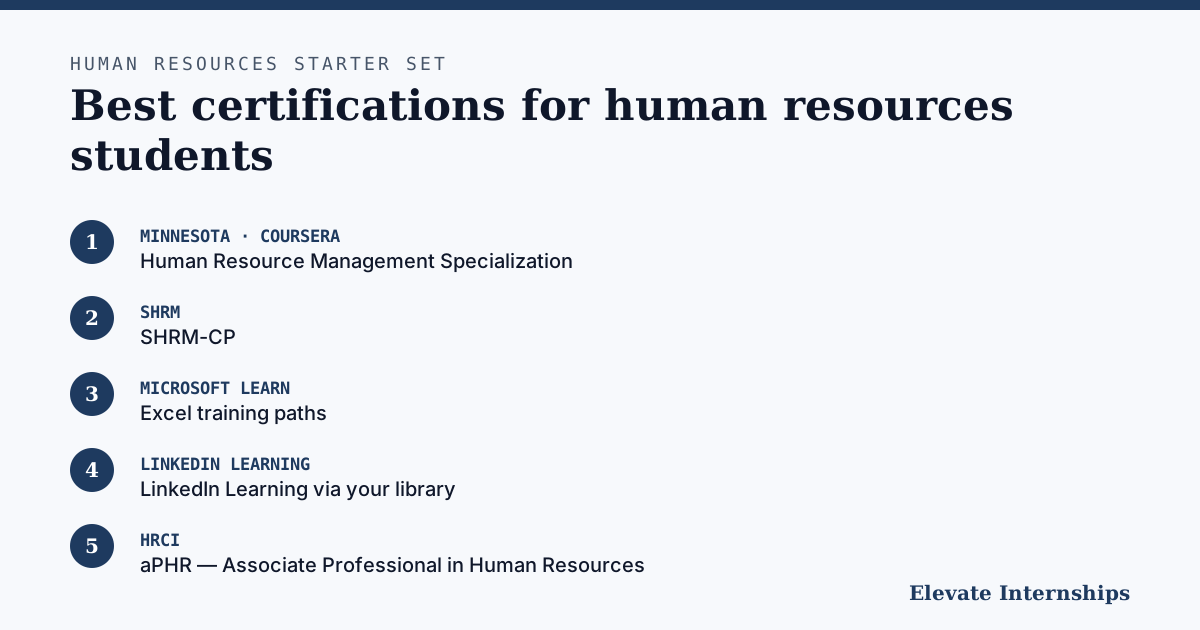
- Human Resource Management Specialization — Minnesota · Coursera. Free to audit: Free to audit; certificate ~$49/month. Hiring, performance, and pay across four courses. The best free HR foundation.
- SHRM-CP — SHRM. Paid: Exam $350–$499 depending on SHRM membership and registration date; students pay $150–$299. Student eligibility rules apply. The HR credential. Check the eligibility table early — it depends on your degree and experience.
- Excel training paths — Microsoft Learn. Free: Free. Formulas, pivot tables, and Power Query. The single most assumed skill in any business internship.
- LinkedIn Learning via your library — LinkedIn Learning. Check your campus: ~$40/month retail, but free through most university and public libraries. Rarely worth paying for — check your university and public library cards first, where it is usually free.
- aPHR — Associate Professional in Human Resources — HRCI. Paid: About $400 ($100 application fee plus $300 exam). No HR experience required. The HR credential built for people with no experience yet — students included.
- People Analytics — Wharton · Coursera. Free to audit: Free to audit; certificate ~$49. Using data for hiring, performance and retention decisions — the fastest-growing corner of HR.
- Leading People and Teams Specialization — Michigan · Coursera. Free to audit: Free to audit; certificate via Coursera subscription. Motivation, team design and leading change. The management half of a business degree, free to audit.
- Google Project Management Professional Certificate — Google · Coursera. Paid: Coursera subscription, ~$49/month; counts toward the hours needed for the CAPM. Traditional and agile project management. Its hours count toward PMI’s CAPM education requirement.
- SHRM student membership and resources — SHRM. Reference: Student membership is heavily discounted. Student chapters, case competitions and the path to the SHRM-CP.
Questions students ask
What HR certification can a college student get?
The aPHR from HRCI is built for people starting out in HR and does not require HR experience. Check HRCI for the current exam fee.
Do HR internships require a certification?
No. Most HR internships hire on interest, communication skills and coursework. A certification shows commitment and gives you vocabulary for interviews.
Is SHRM-CP or aPHR better for students?
For most students the aPHR is the more realistic first step. SHRM credentials are widely recognized; check SHRM's current eligibility rules before deciding.
Other majors
Accounting · Finance · Business Analytics · Marketing · Management · Supply Chain & Operations · Management Information Systems · Economics · Entrepreneurship · International Business · Risk Management & Insurance · Hospitality & Tourism Management · Real Estate