Best certifications for supply chain & operations students
Inventory, logistics, and the spreadsheet work underneath both.
Supply Chain & Operations internships for college students
When supply chain & operations recruits
- Sophomore year — Join the ASCM or APICS student chapter, and ask the career center about co-op programs.
- Junior fall (Sep–Oct) — Manufacturers, retailers and logistics companies recruit at fall career fairs.
- About six months ahead — Co-ops for fall or spring terms recruit roughly half a year before they start.
- Junior spring — Remaining summer roles at mid-size firms.
Supply chain and operations internships reward students who understand how goods, inventory and data move through a business. Industry bodies such as ASCM (formerly APICS) and ISM run the best-known professional certifications, but most are aimed at people with experience. For students, the smart path is foundational training now — Excel, process improvement and supply chain basics — and a professional credential after your first role.
How to choose
- Build Excel and data skills first; forecasting and inventory questions come up in almost every operations interview.
- A Lean Six Sigma Yellow Belt or free lean training shows you understand process improvement.
- ASCM's CPIM has no formal prerequisites, which makes it one of the few professional supply chain certifications a student can pursue; check current costs first.
- Save CSCP, CPSM and similar credentials for later — they are designed for working professionals.
Certifications for Supply Chain & Operations majors
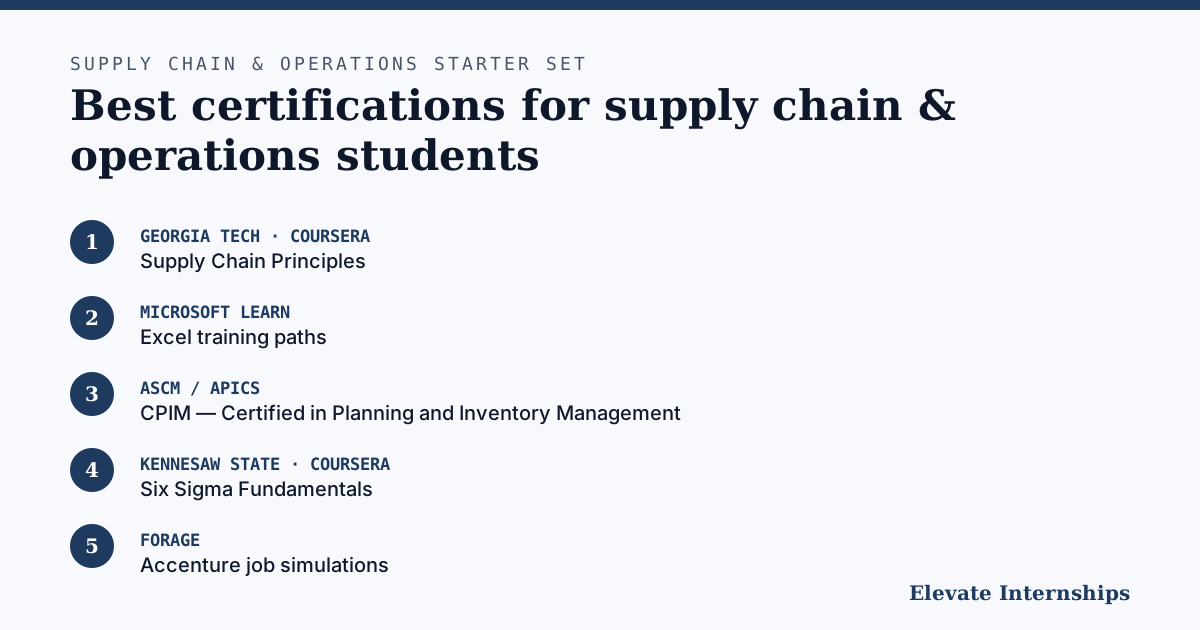
- Supply Chain Principles — Georgia Tech · Coursera. Free to audit: Free to audit. A proper introduction to the field from a top-ranked supply-chain school, free to audit.
- Excel training paths — Microsoft Learn. Free: Free. Formulas, pivot tables, and Power Query. The single most assumed skill in any business internship.
- CPIM — Certified in Planning and Inventory Management — ASCM / APICS. Paid: Exam ~$1,240 for ASCM members or ~$1,720 for non-members; learning-system bundles cost more. The supply-chain credential employers name directly in job postings.
- Six Sigma Fundamentals — Kennesaw State · Coursera. Free to audit: Free to audit; certificate ~/month. ASQ belt exams are separate (~–). Process improvement for operations roles. Check whether your school runs its own belt first — it is usually much cheaper.
- Accenture job simulations — Forage. Free: Free. Consulting, technology, and strategy tasks. Broad enough for most business majors.
- MITx MicroMasters in Supply Chain Management — MIT · edX. Free to audit: Courses free to audit; verified certificates cost extra per course. The most rigorous supply chain program available online, from MIT’s top-ranked center.
- Alteryx SparkED (free student license + certification) — Alteryx. Free: Micro-credentials and Designer Core exam are free; Alteryx is free for students via SparkED. Big 4 audit and consulting teams use Alteryx heavily. Free exam, free student license — unusually good value.
- SAP Learning journeys — SAP. Free: Free learning journeys; certification exams are paid. SAP runs the finance and supply chain of most large companies. The learning journeys are free.
- Supply Chain Management Specialization — Rutgers · Coursera. Free to audit: Free to audit; certificate via Coursera subscription. Logistics, operations, planning and sourcing, one course each.
- CAPM — Certified Associate in Project Management — PMI. Paid: Exam ~$225 for PMI members (membership ~$32 for students), ~$300 otherwise. The student-accessible PMI credential — no work experience required, unlike the PMP.
- CGBP — Certified Global Business Professional — NASBITE International. Paid: Exam in the low hundreds of dollars; check NASBITE for the current fee. The recognised credential for international trade: management, marketing, supply chain and trade finance.
- CSCP — Certified Supply Chain Professional — ASCM. Paid: Roughly $1,000+ for the exam; ASCM student membership lowers the cost. The end-to-end supply chain credential. Usually employer-funded once you are hired.
- CSSGB — Certified Six Sigma Green Belt — ASQ. Paid: Several hundred dollars; ASQ members pay less. The recognised Six Sigma credential from the quality profession’s own body.
- Google Project Management Professional Certificate — Google · Coursera. Paid: Coursera subscription, ~$49/month; counts toward the hours needed for the CAPM. Traditional and agile project management. Its hours count toward PMI’s CAPM education requirement.
- Learn How to Export — International Trade Administration. Reference: Free. The U.S. government’s own guide to exporting: markets, pricing, shipping and documentation.
Questions students ask
What certification should a supply chain student get first?
Start with free or low-cost foundations: Excel, a lean or Six Sigma Yellow Belt, and an introductory supply chain course. Professional credentials such as CPIM are an option once you are sure of the field.
Is the CSCP worth it for a college student?
Usually not yet. The CSCP is aimed at people with a degree or several years of experience, and employers do not expect interns to have it.
When do supply chain internships recruit?
Large manufacturers and retailers often recruit in the fall for the following summer, while smaller companies hire into the spring. See the recruiting timeline on this page for typical timing.
Other majors
Accounting · Finance · Business Analytics · Marketing · Management · Human Resources · Management Information Systems · Economics · Entrepreneurship · International Business · Risk Management & Insurance · Hospitality & Tourism Management · Real Estate